Archived · Manual predecessor
Formies
Custom candles at small scale. Mold engineering at every scale.
// TL;DR
Mass-customized physical goods are bottlenecked by mold production. Steel molds are expensive and slow; hand-poured silicone is inconsistent and slow. Formies used DLP 3D printing to print bespoke molds in under 24 hours and built a small but real DTC candle brand on top of that capability. The hands-on predecessor whose lessons shaped The Maker's Studio.
Custom physical products are bottlenecked by mold production, not by design.
Mass-customized physical goods get stuck on the same bottleneck: the mold. Steel injection molds are precise and durable but cost thousands of dollars and weeks of lead time per shape — viable only at high volume. Hand-poured silicone molds are cheap but inconsistent and slow per unit. Neither serves a small DTC operation that wants to ship a custom candle in two weeks. The bottleneck wasn't the candles. It was the geometry pipeline.
Gift buyers who want personalization without industrial lead times.
The customer base was narrow but motivated: people buying gifts where the moment, not the price, was the value driver. Corporate gifters, wedding shoppers, milestone purchases. The competition wasn't cheap candles — it was generic gifts the buyer was reluctantly settling for.
- Corporate gifting buyers needing personalization on a 2-3 week timeline
- Wedding shoppers wanting custom favors that couldn't be sourced off-shelf
- Milestone gifters (anniversaries, birthdays, retirements) where the personalization is the point
DLP printers were dropping fast — the math had just become possible.
I walked the local mold-maker market in Hyderabad and watched DLP 3D printer prices drop from ~$4K to ~$400 over three years. That was the unlock. Suddenly the geometry pipeline — the part that had always been the bottleneck — could be CAD-driven and software-defined, rather than artisanal and inventory-driven. The candles weren't the innovation; the mold pipeline was.
// Signals
- DLP printer prices ~10× drop over 3 years opened a tooling cost curve nobody in candles had noticed yet
- Local mold suppliers had 6-8 week lead times and steel-mold pricing; the small-batch market was unserved
- Customer interviews showed willingness to pay 2-3× retail for genuine personalization, not just monogramming
The product is candles. The moat is the mold pipeline.
The strategic call was to treat Formies as a small-scale demonstration of a mold-engineering capability, not as a candle business. The candles were the wedge — a recognizable, gift-friendly category that paid the bills while the mold pipeline matured. The path forward, if the math worked, was always going to be the digital configurator that became The Maker's Studio. Formies's job was to validate the constraint, not to scale.
// We said NO to
- In-house manufacturing scale — a factory would have killed the small-batch agility
- Brand-building investment — the budget went into tooling, not photography
- Owned storefront — Shopify and Amazon were the cheap distribution; building our own was overhead
- Catalog breadth — we kept the shape library small and grew it transaction by transaction
DLP-printed molds. Off-the-shelf storefronts. A growing form library.
Each new customer request was an opportunity to print a new mold, deliver the candle, and add the mold to the reusable library. Over six months the shape library compounded into real inventory leverage — by month three, ~40% of orders could be fulfilled from molds we already had. The infrastructure was deliberately minimal: a small DLP setup, a silicone-pouring station, and Shopify + Amazon listings doing the storefront work.
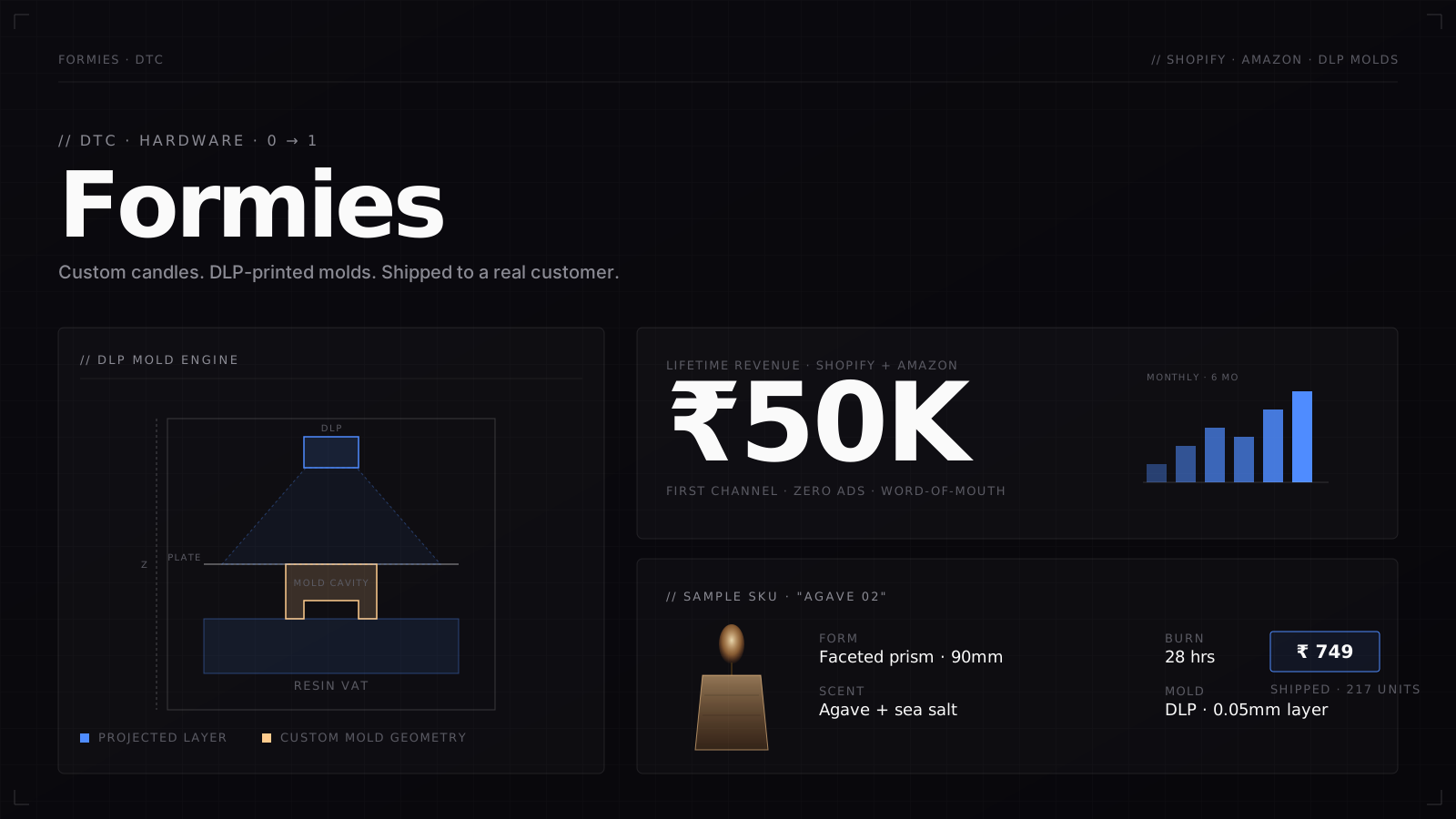
Customer geometry → CAD → DLP print → silicone pour. The entire pipeline ran in under 24 hours per new shape and produced cleaner edges than any silicone-only alternative.
Every new order added to a reusable mold library. By month three, repeat shapes accounted for ~40% of fulfillment — pure operational leverage.
Zero own-infrastructure on the storefront side. Marketplace acquisition was cheap and let us focus capital on the mold pipeline.
Vs. 6-8 weeks for any steel-mold custom alternative. The lead-time gap was the marketing story.
What we deliberately gave up — and what we kept in exchange.
Higher upfront tooling cost, but consistent geometry, dramatically faster turnaround, and a CAD pipeline that opened the door to digital customization later. The DLP capex paid back in two months.
Cheaper customer acquisition and faster shipping logistics. The cost was less brand equity — which we deliberately decided wasn't the moat anyway.
At our scale, automation would have been pure overhead. Manual fulfillment ceilinged us at ~50 orders/week, which matched the volume we wanted while the mold pipeline matured.
A narrow catalog let us go deep on mold quality. Broad SKUs would have diluted the only thing that actually differentiated the product.
₹50K revenue, zero paid acquisition — and the lessons that built The Maker's Studio.
Formies hit ₹50K in lifetime revenue with no ad spend, ~217 units shipped, and a small but loyal repeat-customer base. The more important outcome was the validation: the DLP-mold thesis worked, the form-library compounded as expected, and the operational ceiling pointed us straight at the digital configurator approach that became The Maker's Studio.
What I'd carry forward.
// Stack