Live · Browser-only
Resume Scorer
Recruiter-grade verdicts. Under 30 seconds. In your browser.
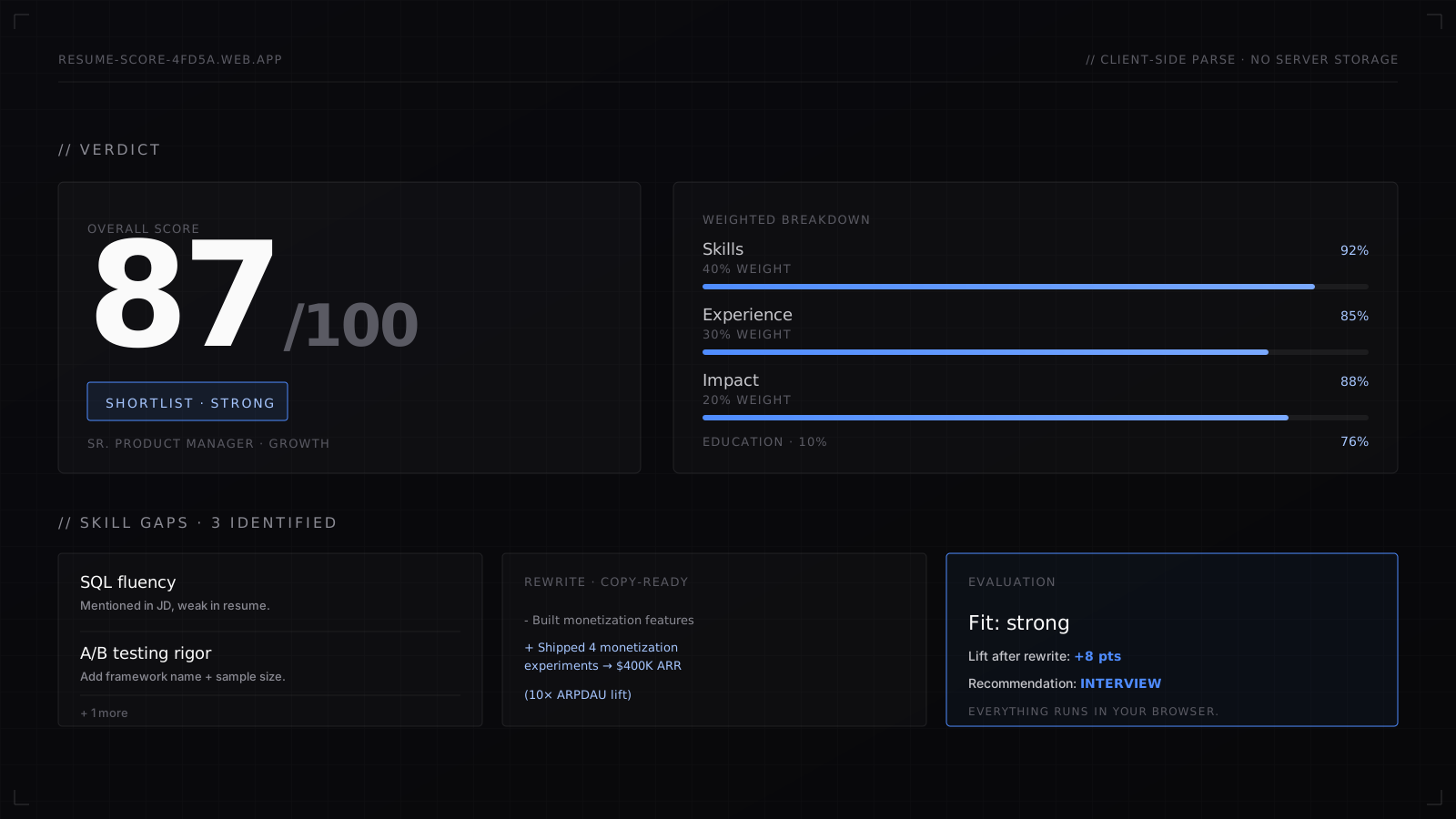
// TL;DR
Job seekers can't tell how their resume will land before they hit submit. Recruiters spend seven seconds. The gap between the two is silent rejections nobody learns from. Resume Scorer closes the loop with a transparent, weighted, in-browser verdict that respects privacy and shows its work — no account, no upsell, no server roundtrip.
A silent funnel — the candidate never finds out why.
Every resume submission is a black box. The candidate hits send. The recruiter scans for seven seconds. The resume either earns a callback or vanishes, and the candidate gets no signal — not even a confirmation of the screening logic. Worse, most public "resume score" tools are either gimmicky (a percentage with no methodology) or paywall-driven (the rewrite is locked). Neither closes the loop in a way the user can act on.
Built for the candidate side first — but useful to recruiters too.
The primary user is the active job seeker who has time to iterate but no feedback channel. The secondary user is the hiring manager or recruiter doing a fast sanity-check before scheduling a screen.
- Active job seekers — especially career switchers and senior individual contributors who don't fit standard ATS keyword profiles
- Bootcamp graduates trying to translate non-traditional experience into recruiter-legible bullets
- Hiring managers running a 30-second fit check before committing to a screening call
Recruiters weight predictably. Candidates have no way to see it.
I spoke to five active recruiters across SaaS and consumer companies. Their first-pass logic was remarkably consistent — Skills weighted ~40%, Experience ~30%, Impact ~20%, Education ~10% — and the most common silent rejection was "missing keyword the ATS expected to see." The candidates I spoke to, by contrast, had no model of recruiter weighting at all — most assumed Experience or Education was the heaviest axis. Closing that gap was the highest-leverage thing the product could do.
// Signals
- 5 / 5 recruiters described first-pass scoring weight as Skills > Experience > Impact > Education
- "Missing keyword" was the #1 silent-rejection cause across all five interviews
- None of the candidates I spoke to could correctly rank the weighting before I told them
Make the methodology visible. Make the privacy real. Refuse the upsell.
The product's job is to translate the recruiter's tacit weighting into something the candidate can see, with enough resolution that they can act on it. The methodology — the 40/30/20/10 split — is shown, not hidden behind a black-box score. The parsing happens entirely client-side, so resumes never touch a server. That's not a privacy nice-to-have, it's a trust mechanic: the product asks the user to upload their most personal professional document, and the architecture of the answer is "we literally can't see it."
// We said NO to
- Account creation — every signup screen is a tax that loses half the funnel
- "Premium tier" with locked rewrites — the upsell would taint the trust
- Opaque single-number score — a black-box "73%" is not actionable
- Server-side AI rewrites — would require uploading the document, breaking the privacy promise
Upload, paste, scroll. A verdict you can act on, in under thirty seconds.
The flow is three steps: upload your PDF, paste the job description, see a verdict. The verdict is broken down into four axes with visible weights, a verdict tier (Shortlist / Interview / Skip), and three top skill-gap rewrites — copy-paste ready. No login, no email capture, no follow-up nudge. The product respects the user's time and trusts them to come back if it was useful.
Resumes are parsed entirely client-side. No upload, no server, no log. Privacy by architecture — not by policy.
Four visible axes: Skills (40%), Experience (30%), Impact (20%), Education (10%). The user sees the weight, the per-axis score, and where they're losing points.
Side-by-side comparison of the resume against the pasted JD — flags the three most consequential keyword gaps and the implicit-skill gaps the ATS would catch.
For the top three gaps, the tool generates rewritten bullets the user can drop directly into the resume. No "click for premium" — the rewrites are the product.
A single, human-readable verdict — Shortlist, Interview, or Skip — calibrated to recruiter language so the candidate knows what bucket their resume currently lands in.
What we deliberately gave up — and what we kept in exchange.
A server roundtrip would have enabled longer, more nuanced rewrites — but it would have broken the privacy promise. Limiting the model to what runs in-browser keeps the architecture honest.
A black-box score is marketable but unactionable. Showing the weighting trades some product-marketing punch for real candidate trust — and for word-of-mouth from recruiters who recognize their own logic in it.
No account means no comeback metric. It also means no friction at the moment the user most needs the tool. I chose the friction-free moment over the retention dashboard.
A full rewrite would have to happen server-side and would homogenize the candidate's voice. Three surgical rewrites are more useful and preserve authorship.
Tool is live; users self-report a real callback lift after applying the rewrites.
The tool ships as a free utility, no acquisition spend, no follow-up funnel. Qualitative feedback is consistently positive — users describe the methodology view as the single most useful part, ahead of the rewrites themselves. Recruiters who've seen it say it matches their tacit logic almost exactly, which has been the strongest validation signal.
What I'd carry forward.
// Stack